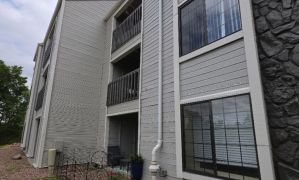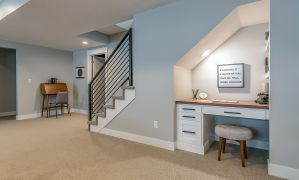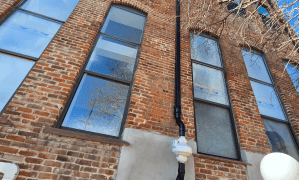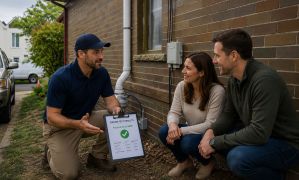

Radon testing in apartments is less common than in single-family homes, but the risk is just as real. Radon can accumulate in ground-floor and below-grade units just as it does in houses, and Colorado’s radon disclosure law (SB23-206) now requires landlords to inform tenants about radon risks. Whether you rent or manage a multi-family property, understanding radon testing and mitigation is an important part of protecting indoor air quality.
The conversation around radon testing in apartments is overdue. Radon awareness in Colorado has grown significantly, but most attention has centered on single-family homes and real estate transactions. Multi-family properties, including apartment complexes, condominiums, and mixed-use residential buildings, face the same underlying risk from soil-based radon entry, and in some cases the complexity of shared spaces and stacked units makes managing that risk even more important. Below, we cover how radon affects multi-family buildings, what Colorado law now requires of landlords, who is responsible for testing, and what options exist when levels come back elevated.
Does Radon Affect Apartments and Multi-Family Buildings?
Radon is broadly understood as a risk in single-family homes because that’s where most public education and testing campaigns have been focused. The typical mental image of a radon problem involves a house with a basement, a sump pit, and a mitigation pipe running up an exterior wall. But radon doesn’t distinguish between a detached house and a six-unit apartment building; it enters any structure the same way, through the soil beneath and around the foundation, and accumulates wherever indoor air cannot easily exchange with outdoor air.
In multi-family buildings, ground-floor and basement-level units carry the greatest risk because they sit directly above or adjacent to the soil where radon originates. The closer a unit is to the foundation, the more exposure it has to the entry points, such as foundation cracks, slab seams, and utility penetrations, through which radon migrates indoors. Upper-floor units generally show lower concentrations since the gas disperses as it moves upward, though poorly ventilated stairwells or shared HVAC systems can sometimes carry radon to levels above the ground floor. The key point for property owners and managers is that radon risk in multi-family buildings is real, concentrated at lower levels, and worth assessing rather than assuming away.
How Does Radon Enter Multi-Family Buildings?
The entry pathways for radon in a multi-family building are the same as in any other structure built on soil, though the scale and complexity of these pathways can be greater in larger properties.
Foundation Cracks and Slab Penetrations
Concrete foundations in apartment buildings and large residential structures develop cracks over time through settling, temperature cycling, and the natural curing process of concrete, just as they do in single-family homes. A hairline crack in a slab that spans the footprint of an entire apartment building creates a much longer potential entry seam than one in a small residential foundation, which means the cumulative volume of radon that can migrate through cracked concrete is proportionally larger. Slab penetrations, anywhere a pipe, conduit, or structural element passes through the floor, are another consistent source of entry, and in a building with dozens of units these penetrations can number in the hundreds.
Sump Pits and Utility Penetrations
Sump pits, drainage channels, and utility service entries create direct, open connections between the soil beneath a building and the indoor air above it. In multi-family buildings these systems are often shared infrastructure, meaning a single unsealed sump pit in a common basement can contribute elevated radon concentrations to multiple units rather than just one. Utility penetrations for water, electrical, gas, and telecommunications lines pass through foundation walls and slabs throughout the building, and each penetration is a potential entry point where the original seal has degraded or where settling has opened a gap around the pipe or conduit.
Shared Basement and Parking Structures
Many apartment complexes include shared basement-level spaces such as laundry rooms, storage areas, mechanical rooms, or below-grade parking structures. These spaces sit at or below grade with substantial soil contact and frequently lack the ventilation needed to dilute soil gas before it accumulates. Because these areas are connected to the rest of the building through stairwells, elevator shafts, utility chases, and HVAC ductwork, radon that accumulates in a shared basement can be distributed to other areas of the building rather than remaining isolated below ground. This is what makes radon in multi-family buildings more complex than in single-family homes: a problem that originates in a shared mechanical room can affect units several floors above it depending on how air moves through the building.
Colorado Radon Law and Landlord Responsibilities
Colorado’s approach to radon disclosure changed significantly on August 7, 2023, when Senate Bill 23-206 (SB23-206) went into effect statewide. Before signing a lease, landlords must now provide tenants with a written disclosure that includes a warning about radon dangers, any known radon test results, concentration levels detected, and whether a radon mitigation system has been installed. Tenants must sign the disclosure to acknowledge receipt, and landlords are also required to provide a copy of the most recent radon brochure published by the Colorado Department of Public Health and Environment.
The disclosure requirements are specific and detailed. Under SB23-206, a landlord must disclose any knowledge of the property’s radon concentrations, including whether tests have been conducted, the most current records and reports, a description of any radon concentrations detected or mitigation performed, and information about any existing mitigation system including documentation. These aren’t vague recommendations; they are legal obligations with real consequences for non-compliance.
If a landlord fails to provide the required disclosures, or does not mitigate elevated radon levels within 180 days of notification, tenants have the right to void the lease. After January 1, 2026, this right applies only to leases longer than one year. A landlord who fails to comply with the disclosure requirements also breaches the warranty of habitability under Colorado law. For a full breakdown of what these requirements mean in practice for landlords and property managers, our detailed guide to Colorado radon landlord requirements covers the legal specifics in depth.
Who Is Responsible for Radon Testing in an Apartment?
SB23-206 requires disclosure of known radon information but does not mandate that landlords test a property before leasing it. However, the law creates a strong practical incentive to test: a landlord who has never tested cannot disclose known radon levels, but once a test is performed and reveals elevated concentrations, that information must be disclosed to every prospective tenant going forward. For property managers overseeing multi-unit buildings, proactive testing is increasingly being viewed as the smarter compliance strategy, since it provides documentation, establishes a baseline, and demonstrates due diligence rather than leaving the question open.
Tenants are permitted to test a property they are renting without obtaining a radon professional license, though professional testing by a licensed radon measurement provider is required when results will be used for official disclosure or mitigation decisions. In practice, tenants in ground-floor or basement-level apartments who are concerned about radon exposure can place a test device themselves, but if elevated levels are found they should report the result to the landlord in writing, which starts the 180-day mitigation clock under state law.
For property managers overseeing a building with multiple units, building-wide testing is generally the most efficient approach. Rather than waiting for a tenant to raise the issue unit by unit, scheduling a coordinated testing effort across all at-risk units creates a complete picture of the building’s radon profile, allows mitigation planning to address the problem systematically, and produces documentation that supports compliance with SB23-206’s disclosure requirements.
How Is Radon Testing Done in Multi-Family Buildings?
Unit-by-Unit Testing vs. Building-Wide Protocols
Testing in multi-family settings can be done on a unit-by-unit basis or through a coordinated building-wide protocol, and the right approach depends on the building’s size, layout, and foundation type. Unit-by-unit testing makes sense in smaller buildings or when the goal is to assess a specific complaint or inquiry. Building-wide protocols, which follow industry standards such as the ANSI/AARST measurement guidelines for multi-family buildings, are better suited to larger complexes where a single mitigation system may need to address multiple units and shared spaces simultaneously.
Which Units Should Be Tested First
In multi-family buildings, testing priority should be given to ground-floor and basement-level units first, since these are the units with the most direct exposure to foundation entry points and the highest likelihood of elevated readings. Units on the first floor above a shared parking structure or mechanical basement should also be prioritized. Upper-floor units generally warrant testing only after lower-level units have been assessed, or if building-wide HVAC distribution patterns suggest that soil gas may be reaching higher floors through shared systems.
Short-Term vs. Long-Term Testing Options
Short-term tests, which run for a minimum of 48 hours under closed-building conditions, are the standard for real estate and rental compliance situations because they produce results quickly and meet regulatory requirements. Long-term tests, which run for 90 days or more, provide a more accurate picture of average radon exposure over time since they capture seasonal and weather-related fluctuations that a 48-hour test may miss. For property managers who want the most accurate baseline picture of a building’s radon levels, long-term testing is often worth the additional time, especially before investing in a mitigation system where right-sizing the solution depends on understanding the true average concentration.
What Happens If Radon Levels Are Elevated in an Apartment?
When a test in any unit comes back at or above the EPA’s recommended action level of 4.0 pCi/L, the landlord is responsible for taking action. In a rental context this carries legal weight: under SB23-206, once a landlord is notified by a radon professional that concentrations have been measured at or above 4.0 pCi/L, the clock starts on a 180-day window to make a reasonable effort to mitigate, or risk having the affected tenant legally void their lease.
Mitigation options in multi-family settings follow the same basic principles as in single-family homes, but the scale and engineering can be more complex. In a building where multiple ground-floor units share a common foundation, a single sub-slab depressurization system may be able to address radon entry across several units at once, making the mitigation more cost-efficient than treating each unit individually. In buildings with shared basements or below-grade parking structures, dedicated ventilation and depressurization systems for those common areas may be needed before individual unit concentrations can be brought into compliance.
Radon mitigation for apartments requires working with a certified professional who understands both the physics of sub-slab depressurization and the structural realities of multi-family construction. A licensed radon mitigation contractor will assess the building’s foundation type, slab configuration, soil conditions, and HVAC layout before designing a system that addresses the specific entry pathways identified during testing. Post-mitigation testing is always required to confirm that the installed system has brought radon concentrations below the action level in each affected unit before the issue is considered resolved.
Radon Testing and Mitigation for Colorado Apartment Owners and Property Managers
Radon in multi-family buildings is a manageable problem, but it requires a proactive approach, especially in Colorado, where the state’s geology makes elevated radon a routine finding rather than a rare one. With SB23-206 now in effect, landlords who haven’t tested their properties are operating with an incomplete picture of their compliance obligations and their tenants’ health exposure. Testing, documenting results, and addressing elevated concentrations through professional mitigation isn’t just good practice in Colorado; it’s the law, and it’s the foundation of a rental property that tenants can trust.
Better Colorado Radon works with property owners, landlords, and property managers across Colorado to navigate the full process, from compliant testing that meets state standards, to mitigation system design and installation built for multi-family properties, to post-mitigation verification that gives both landlords and tenants documented confidence that indoor air quality is protected. Whether you’re starting from scratch on a building that’s never been tested or addressing a result that came back above the action level, our licensed team is ready to help you stay compliant and keep your tenants safe.
Book Today to schedule professional radon testing or mitigation for your Colorado rental property.