There is no completely safe radon level, but the EPA recommends taking action when radon reaches 4.0 pCi/L or higher. The EPA also suggests considering mitigation at levels between 2.0 and 4.0 pCi/L. The average indoor radon level in U.S. homes is around 1.3 pCi/L, while outdoor air typically measures around 0.4 pCi/L. In Colorado, where elevated radon is common due to the state’s geology, understanding these numbers is an important first step toward protecting your home and family.
Asking what is a safe radon level is a reasonable starting point, but the honest answer is more nuanced than a single number. Radon risk operates on a spectrum, and where your home falls on that spectrum determines what action, if any, is appropriate. Here’s what the science and the EPA say, and what it means for Colorado homeowners specifically.
Is There Such a Thing as a Safe Radon Level?
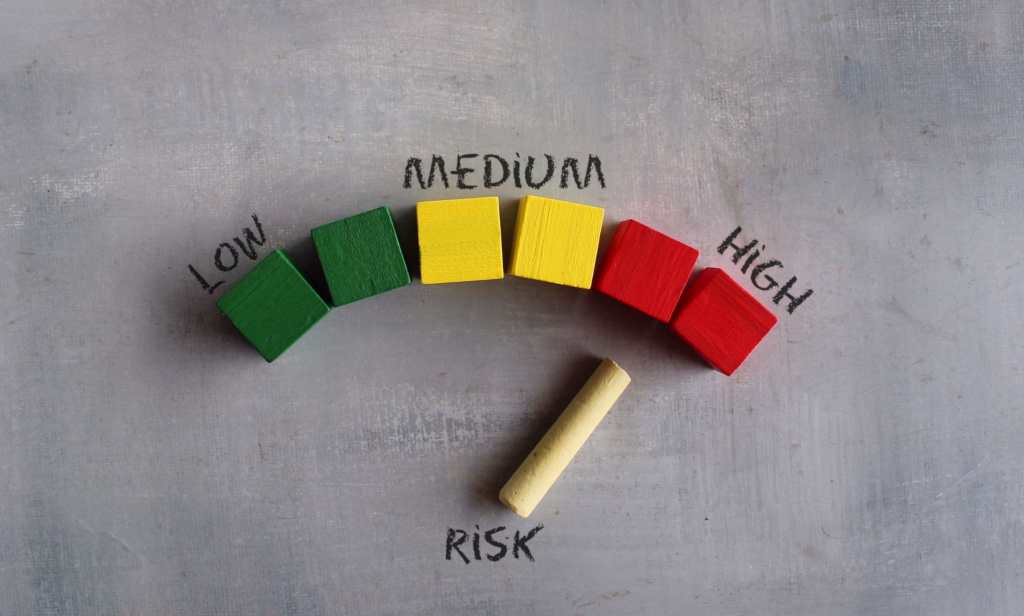
Radon is classified as a Group A human carcinogen by the EPA, meaning it is known to cause cancer in humans based on scientific evidence. Unlike many environmental hazards that have established safe thresholds below which no harm occurs, radon does not have a confirmed zero-risk level. Any exposure carries some degree of risk; the question is whether that risk is meaningful enough to warrant action. The danger grows with both concentration and duration: a moderately elevated level breathed over many years can pose a similar cumulative risk as a very high level breathed over a shorter time. This is why radon risk is best understood not as a binary safe-or-unsafe condition, but as a sliding scale where lower is always better, even when a reading technically falls below the EPA action level.
What Does the EPA Say About Safe Radon Levels?
The 4.0 pCi/L Action Level
The EPA recommends that homeowners take action to reduce radon when levels reach 4.0 picocuries per liter (pCi/L) of air. A picocurie is a unit of radioactive decay; at 4.0 pCi/L, roughly 12,672 radon atoms are breaking down in every liter of air in your home every hour. The 4.0 pCi/L threshold is an action level, not a safe level. The EPA is clear that even at levels slightly below 4.0 pCi/L, radon exposure carries a real lifetime lung cancer risk, which is why the guidance doesn’t stop there.
The 2.0–4.0 pCi/L Gray Zone
For homes testing between 2.0 and 4.0 pCi/L, the EPA recommends considering mitigation. This range is often called a gray zone because action isn’t required, but the risk is elevated enough that reducing exposure is a reasonable and worthwhile choice. For Colorado homeowners, where baseline radon levels tend to run higher than the national average, the lower end of this range deserves more attention than it might in other states.
Average Indoor and Outdoor Radon Levels
The national average indoor radon level is approximately 1.3 pCi/L, and outdoor air typically measures around 0.4 pCi/L. These figures provide useful context: a home at 1.3 pCi/L is at the national baseline, while a home at 3.0 pCi/L is already more than twice that. Colorado’s average indoor radon level is approximately 6.4 pCi/L, well above both the national average and the EPA’s action level, which puts the average untested Colorado home well inside the range where action is warranted.
How Do Colorado Radon Levels Compare to National Averages?
Colorado’s elevated radon levels are a direct result of the state’s geology. The Rocky Mountain region sits on substantial deposits of granite and uranium-bearing rock, and as uranium decays naturally over time, it continuously releases radon gas that migrates upward through the soil and into buildings above. Every one of Colorado’s 64 counties is classified as a high-radon-potential zone by the EPA, a designation that reflects the statewide nature of the problem rather than isolated pockets of concern. Approximately 50 percent of Colorado homes that have been tested come back above the 4.0 pCi/L action level, compared to a national average of around 1 in 15 homes. For more on the state-specific data, our page on Colorado radon facts covers the numbers in detail. Colorado homeowners face a meaningfully higher baseline risk than the national figures suggest, which is why testing here isn’t optional due diligence; it’s a practical necessity.
What Radon Level Should You Be Concerned About?
Below 2.0 pCi/L – Lower Risk, Still Worth Monitoring
A result below 2.0 pCi/L indicates a relatively low radon level, and mitigation is generally not recommended at this range. That said, “lower risk” is not the same as “no risk,” and homeowners should still retest periodically since radon levels can shift over time due to seasonal changes, settling, or renovations. A periodic retest every two years is a reasonable baseline practice even for homes that previously tested low.
2.0–3.9 pCi/L – Consider Mitigation
A result in this range falls below the EPA action level but above the point where the EPA recommends at least evaluating mitigation. For Colorado homeowners, where the surrounding soil is more radon-rich than average, reducing a level in this range is a particularly sound investment since the conditions that produced it are unlikely to improve on their own. Mitigation at this level tends to be straightforward, and the cost is the same whether levels are 2.5 or 6.0 pCi/L.
4.0 pCi/L and Above – Take Action
At 4.0 pCi/L or above, the EPA is unambiguous: action is warranted, and the higher the level, the more urgent the timeline. A result of 8.0 pCi/L represents twice the risk of a result at 4.0 pCi/L, and levels above 10 pCi/L are not uncommon in Colorado and represent a risk level that should be addressed as quickly as possible. Professional mitigation at these concentrations is not a precaution; it is a direct health protection measure.
How Do You Know What Your Radon Level Is?
Radon is invisible, odorless, and tasteless, so there is no way to detect it without testing. A short-term test, the minimum of 48 hours placed under closed-house conditions, is the standard option for most homeowners and produces results within days. Long-term tests, which run for 90 days or more, provide a more accurate average that captures seasonal variation and gives a better picture of actual year-round exposure. Knowing how to read a radon test result is just as important as running the test, since the number alone doesn’t tell you what action it calls for without context. Homeowners should retest after any mitigation system is installed, after significant renovations that affect the foundation or HVAC, and periodically every two years as a routine check.
What Happens After You Get Your Radon Test Results?
Results Below 4.0 pCi/L
A result below 4.0 pCi/L means no immediate action is required, though results in the 2.0–3.9 range merit a conversation about whether mitigation makes sense given the home’s specific circumstances, occupancy patterns, and long-term plans. Retesting on a regular schedule is still recommended to confirm the level remains stable.
Results At or Above 4.0 pCi/L
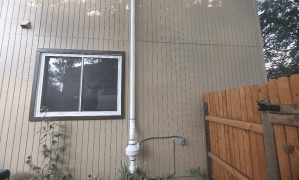
A result at or above 4.0 pCi/L calls for professional mitigation. Residential radon mitigation typically uses a sub-slab depressurization system that draws radon from beneath the foundation and vents it safely above the roofline, preventing it from entering the living space. These systems are highly effective; the EPA estimates that mitigation can reduce indoor radon levels by up to 99 percent in most homes. Installation is completed in a single day for most properties, and a post-mitigation test confirms the new level before the project is considered complete.
Can You Ever Reach Zero Radon in Your Home?
Mitigation systems do not eliminate radon; they reduce it to the lowest achievable level given the home’s specific conditions. Most well-designed and properly installed mitigation systems bring radon levels well below 2.0 pCi/L, and many achieve results closer to the outdoor average of 0.4 pCi/L. The goal of mitigation is not to reach zero, which is not physically achievable in a structure built on soil, but to reduce the concentration to a level where the long-term health risk is minimized as much as practically possible. A post-mitigation test run after the system is installed provides documented confirmation of the result and gives homeowners and future buyers a verifiable record that the issue was professionally addressed.
Get Professional Radon Testing in Colorado
The only way to know where your home falls on the radon risk spectrum is to test it. In Colorado, where the geology pushes baseline radon levels well above the national average, testing is the responsible first step for every homeowner, regardless of whether the house is old or new, has a basement or not, or has ever had a previous test. Better Colorado Radon provides professional radon testing for Colorado homeowners, with results that give you a clear picture of your exposure level and a licensed team ready to help you take the right next step.
Book Today to schedule professional radon testing with Better Colorado Radon and find out exactly where your home stands.