
Radon doesn’t only threaten homes. It enters commercial buildings through the same foundation pathways and accumulates in the same below-grade spaces where employees and customers spend their days. For Colorado business owners and property managers, commercial radon testing is one of the most practical steps toward protecting indoor air quality and staying on the right side of OSHA and EPA guidance.
Here’s what the regulations say, which buildings need testing, and how the process works from start to finish.
Is Commercial Radon Testing Required by Law?
OSHA’s General Duty Clause and Radon
OSHA does not currently mandate radon testing for most commercial workplaces. However, OSHA’s General Duty Clause requires employers to provide a workplace free from recognized hazards likely to cause serious harm. Because radon is a known carcinogen, it falls under this obligation. As a result, employers who ignore a known radon problem can face liability even without a specific testing mandate.
OSHA does maintain a formal occupational radon standard with a permissible exposure limit of 100 pCi/L. That threshold, however, is widely considered outdated. In practice, the EPA’s 4.0 pCi/L action level is the benchmark that health professionals and liability-conscious business owners follow.
EPA Recommendations for Non-Residential Buildings
The EPA recommends testing any building where people spend significant time — including offices, schools, retail spaces, and healthcare facilities. Furthermore, the EPA applies the same 4.0 pCi/L action level to commercial buildings that it uses for homes. The agency also recommends considering action at levels between 2.0 and 4.0 pCi/L, especially in spaces with high or continuous occupancy.
Colorado State Guidance on Commercial Radon Testing
Colorado takes a more specific approach for certain occupancy types. Schools must test in accordance with AARST protocols and keep results on file. Additionally, new schools must complete testing within 19 months of occupancy. Child care facilities must test at licensing and again within six months of opening a new location. For all other commercial building types, formal state mandates don’t yet exist. That said, the EPA action level still serves as the standard of care that Colorado regulators and courts reference.
Which Commercial Buildings Should Be Tested?
Ground-Floor and Below-Grade Offices
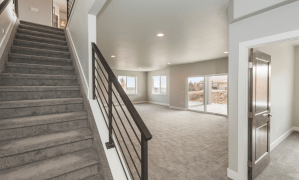
Ground-floor and basement-level offices carry the greatest risk. These spaces sit closest to the radon source and often lack the ventilation that upper floors receive. Employees who work in these spaces full time accumulate significant radon exposure over the course of a year.
Schools, Daycare Centers, and Healthcare Facilities
These settings are the highest testing priority for two reasons. First, Colorado law requires testing for schools and child care facilities. Second, children and medically vulnerable patients face greater health risks from radon exposure than healthy adults. Our post on radon in schools covers the specific testing requirements and mitigation considerations for these settings.
Retail Spaces, Warehouses, and Mixed-Use Buildings
Retail spaces at grade level face the same radon risk as any other ground-contact structure. Warehouses are a particular concern when they stay sealed year-round, because that reduces air exchange and allows radon to accumulate. Mixed-use buildings with residential units above ground-floor commercial spaces often require independent testing in both occupancy types.
Multi-Tenant Office Buildings and Co-Working Spaces
Radon levels can vary significantly between units on the same floor depending on ventilation and HVAC configuration. Because of this, testing each ground-floor and lower-level tenant space individually gives a more accurate picture than testing common areas alone.
How Does Commercial Radon Testing Work?
Selecting the Right Test Device for a Commercial Space
Commercial radon testing uses either passive devices — charcoal canisters or alpha track detectors — or continuous electronic monitors. Passive devices are cost-effective for initial screening. Continuous monitors, on the other hand, log radon levels at frequent intervals and reveal patterns tied to HVAC cycles, occupancy loads, and weather changes. For complex commercial buildings, continuous monitoring often provides more actionable data.
Determining How Many Test Locations Are Needed
Commercial testing requires more devices than a typical residential test. The number of test locations depends on the building’s square footage, number of occupied floors, foundation type, and HVAC zoning. A certified professional assesses the building first and develops a placement plan that meets the applicable ANSI/AARST protocol for that occupancy type.
Short-Term Testing vs. Long-Term Testing in Commercial Settings
Short-term tests (48–96 hours) work well for initial screenings and compliance situations where results are needed quickly. Long-term tests (90+ days), however, capture seasonal variation and HVAC fluctuations more accurately. For buildings where the goal is understanding true annual average exposure, long-term testing gives a more reliable baseline.
Who Should Conduct the Test: DIY vs. Certified Professional
A certified radon measurement professional should conduct commercial radon testing. Unlike residential DIY testing, commercial testing involves protocol selection, multi-zone placement planning, and documentation that meets regulatory standards. Furthermore, professional results carry the credibility needed to communicate findings to employees, tenants, and regulators.
Understanding Commercial Radon Test Results
The EPA’s 4.0 pCi/L action level applies to commercial spaces just as it does to homes. Any zone that tests at or above this level requires mitigation. However, the EPA also recommends considering action at levels between 2.0 and 4.0 pCi/L — particularly in heavily occupied spaces. Even moderately elevated levels represent meaningful cumulative exposure for employees who spend long hours in the building.
After testing, business owners should document and retain all results. Additionally, employers have an ethical — and in some cases legal — obligation to communicate radon findings to employees who occupy affected spaces. Transparency protects both the workforce and the business.
What Happens If a Commercial Building Tests High for Radon?
Notifying Employees and Tenants
When any zone tests at or above 4.0 pCi/L, notify affected employees and tenants promptly. Clear, factual communication reduces alarm and demonstrates responsible action.
Scheduling Mitigation
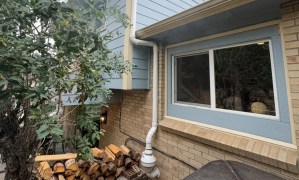
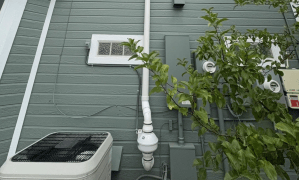
After notification, the next step is scheduling professional mitigation. A licensed mitigation contractor assesses the building and designs a sub-slab depressurization system suited to the foundation type and footprint. In most cases, the contractor can install the system during off-hours to minimize disruption to business operations.
Post-Mitigation Testing and Verification
After installation, the contractor places a post-mitigation test to confirm results. This test runs for 48 to 96 hours and verifies that radon has dropped below the action level in all affected zones. The results become part of the building’s permanent radon documentation record.
How Often Should Commercial Buildings Be Tested?
The EPA recommends retesting every two years as a baseline for commercial buildings. Additionally, building owners should retest after any major renovation that affects the foundation, basement, or HVAC system. Retesting is also necessary after a mitigation system is installed, after significant changes to building occupancy or layout, and whenever a new tenant moves into a ground-floor or lower-level space.
Why Colorado Commercial Properties Face Elevated Radon Risk
Colorado’s geology creates a statewide radon challenge that affects commercial properties just as much as homes. The state’s granite and uranium-bearing rock formations continuously release radon gas into the soil. As a result, all 64 Colorado counties carry a high radon potential designation, and the statewide average indoor radon level sits at approximately 6.4 pCi/L — well above the EPA action level.
Commercial buildings are not exempt from this risk. In fact, many businesses operating in ground-floor spaces across Colorado are likely experiencing elevated radon levels without knowing it, simply because no one has tested. Our overview of Colorado radon facts covers the statewide data and what it means for property owners. Testing is the only way to know where your building stands.
Schedule Commercial Radon Testing With Better Colorado Radon
Colorado business owners and property managers have a responsibility to understand the air quality in the spaces they operate. Commercial radon testing is fast, professional, and provides the documentation needed to make informed decisions and protect the people who spend time in your building every day.
Better Colorado Radon provides certified commercial radon testing for businesses and property managers across Colorado. Our team handles the site assessment, device placement, lab processing, and results documentation from start to finish.
Book Today to schedule commercial radon testing with Better Colorado Radon.