
Radon doesn’t stop at the front door of a residential property. It enters commercial buildings the same way it enters homes, through foundation cracks, slab penetrations, and sump openings. As a result, it accumulates in any ground-floor or below-grade space where people spend time. For Colorado business owners, the risk is real and the responsibility is theirs.
Radon mitigation in commercial buildings follows the same core principles as residential mitigation. However, the scale, regulatory context, and testing approach are different. Here’s what every Colorado business owner and property manager needs to know.
Does Radon Affect Commercial Buildings?
Yes! And at the same risk levels as residential properties.
Radon is a soil gas. It doesn’t distinguish between a house and an office building. Any structure with ground-floor or below-grade occupied space is susceptible. In fact, the same EPA action level of 4.0 pCi/L applies whether the space is a living room or a conference room.
The commercial spaces at greatest risk are those where employees or customers spend extended time near the foundation level. These include ground-floor offices, retail suites, warehouses, school classrooms, healthcare clinics, gyms, and restaurants. The longer people occupy these spaces, the more cumulative radon exposure they accumulate.
Colorado compounds the risk further. The state’s granite and uranium-bearing geology generates radon at higher-than-average rates across all 64 counties. As a result, the statewide average indoor radon level sits at approximately 6.4 pCi/L, well above the EPA action level. Our overview of Colorado radon facts covers the data in detail. For businesses operating anywhere in Colorado, assuming your building is low-risk without testing is a meaningful gamble.
What Are Colorado Business Owners Responsible For?
General Duty Clause and Employer Responsibility for Indoor Air Quality
OSHA’s General Duty Clause requires employers to provide a workplace free from recognized hazards. Radon qualifies as one of those hazards. While OSHA’s specific occupational radon standard sets a permissible limit of 100 pCi/L — widely considered outdated — the General Duty Clause creates a broader obligation. Specifically, employers must address known indoor air quality risks at levels the EPA considers actionable.
Colorado State Radon Guidance for Non-Residential Buildings
Colorado requires schools to test per AARST protocols and maintain results on file. Additionally, new schools must test within 19 months of occupancy. Child care facilities must test at licensing and again within six months of opening. For other commercial property types, formal state mandates don’t currently exist. However, the EPA’s 4.0 pCi/L action level still applies as the standard of care.
When Testing Is Required vs. Recommended
Testing is legally required for schools and child care facilities. For all other commercial buildings, testing is strongly recommended — both as a health protection measure and as documentation of due diligence. In fact, a business owner who has tested, disclosed results, and mitigated where necessary holds a far stronger legal position than one who never investigated.
How Is Radon Testing Done in Commercial Buildings?
Where to Test in a Commercial Space
Ground-floor and basement-level occupied areas are the top testing priority. Any space where people regularly spend time near foundation level needs a test. Upper floors are lower priority, but they may also need testing in buildings with shared HVAC systems that could distribute radon vertically.
Short-Term vs. Long-Term Commercial Testing Protocols
Short-term tests (48–96 hours) work well for initial screenings and compliance situations. Long-term tests (90+ days), on the other hand, give a more accurate picture of average annual exposure. They are better suited to buildings where ongoing occupancy is the primary concern. For regulated occupancy types like schools and child care centers, testing must follow ANSI/AARST protocols specific to those building categories.
How Many Test Devices Are Needed for Larger Buildings
Commercial testing requires more devices than residential testing. Building size, number of floors, foundation type, and HVAC configuration all influence device placement. Because of this, a qualified commercial radon professional performs a site assessment before testing. This assessment produces a placement plan that meets protocol requirements for that building type. For more detail, our post on commercial radon testing covers protocols and building-specific considerations.
How Does Radon Mitigation Work in a Commercial Building?
Sub-Slab Depressurization for Large Slab Foundations
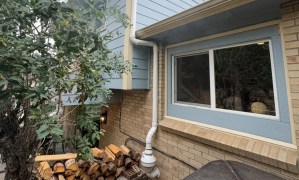
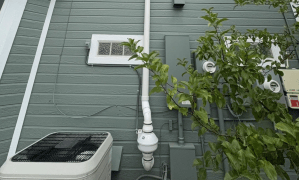
Active sub-slab depressurization (ASD) is the primary mitigation method for commercial buildings, just as it is for homes. The installer drills one or more suction points through the slab and connects them to vent pipes and inline fans. These fans maintain negative pressure beneath the foundation and pull radon out before it enters the occupied space. In larger buildings, the installer may need multiple suction points and fans to depressurize the full slab area effectively.
Ventilation-Based Systems for Larger Spaces
In some commercial spaces — particularly warehouses, large retail floors, or buildings with high ceilings — enhanced mechanical ventilation can supplement depressurization. Specifically, it dilutes any radon that enters the space before it accumulates. However, ventilation alone is rarely sufficient as a primary mitigation strategy. Instead, it works best as a supporting component in buildings where the size or configuration makes full slab coverage complex.
Adapting Mitigation to Different Commercial Foundation Types
Commercial buildings often have mixed or non-standard foundations. For example, a building may include partial basements, crawl spaces beneath sections of a larger slab, or below-grade parking structures. Each zone may require its own mitigation approach. Additionally, the system design must account for how the building’s HVAC architecture interacts with each foundation type.
How Long Does Commercial Radon Mitigation Take?
Small commercial properties — a single-tenant office suite, a ground-floor retail space, a small clinic — are typically mitigated in one to two days. Larger buildings with multiple zones, complex foundations, or extensive pipe routing take longer.
In most cases, the contractor can schedule installation during off-hours or over a weekend to minimize disruption. The work stays localized to the foundation and pipe routing areas, so the business doesn’t need to close. However, several factors can extend commercial timelines. Large footprints requiring multiple suction points, finished spaces that complicate routing, and complex HVAC integration all add time to the project.
Radon in Specific Commercial Settings
Office Buildings and Co-Working Spaces
Ground-floor and lower-level offices carry the highest risk. Employees who spend eight or more hours a day in a ground-floor suite accumulate radon exposure comparable to what a homeowner experiences in a residential basement. Because of this, ground-floor offices are a top testing priority.
Retail and Warehouse Facilities
Retail spaces at grade level face the same risk as any other ground-contact commercial space. Additionally, climate-controlled warehouses that stay sealed year-round are a particular testing priority. Workers stationed near the foundation in these facilities can accumulate significant exposure over time.
Schools and Childcare Centers
Schools and childcare centers are the highest-priority commercial settings for radon in Colorado. This is true both because of regulatory requirements and because children are more vulnerable given their higher breathing rates. Our post on radon in schools covers testing requirements and mitigation considerations specific to educational facilities.
Healthcare and Medical Offices
Medical offices and clinics often operate in ground-floor or lower-level suites, sometimes in older buildings with aging foundations. For facilities serving immunocompromised or high-risk patients, indoor air quality is especially important. Even so, many healthcare facilities have never tested for radon.
What Happens After Mitigation Is Installed?
After installation, the contractor places a post-mitigation radon test to confirm results. This short-term test runs for 48 to 96 hours and confirms whether radon has dropped below 4.0 pCi/L in all tested zones.
Ongoing monitoring also matters. Commercial systems need periodic checks to confirm fans are operating and pressure is maintained. In regulated facilities, retesting schedules are part of the compliance requirement. Furthermore, documented test results, mitigation records, and post-mitigation verification create a defensible record for employees, tenants, and inspectors alike.
Schedule Commercial Radon Mitigation With Better Colorado Radon
Radon in a commercial building is a manageable problem — but only once someone identifies and addresses it. In Colorado, the geology makes elevated radon a statewide reality for commercial buildings and homes alike. As a result, testing and mitigation aren’t optional safeguards. They’re practical responsibilities.
Better Colorado Radon provides commercial radon assessments, testing, and mitigation system installation for business owners and property managers across Colorado. Our licensed team designs and installs systems built for your building’s specific conditions — from a single-tenant office to a multi-zone commercial property.
Book Today to schedule a commercial radon assessment with Better Colorado Radon.