
Basements are where radon concentrates most. They sit closest to the soil, have the most foundation contact, and stay sealed longer than any other part of the home. If your Colorado home has a basement and you haven’t tested for radon, there’s a real chance you’re living above elevated levels without knowing it. A basement radon mitigation system is a proven fix, and in most cases, we install it in a single day.
Here’s what you need to know about why basements are high-risk, how mitigation works, and what the process looks like from test to installation.
Why Basements Have Higher Radon Levels
Radon enters a home through the path of least resistance: Foundation cracks, expansion joints, sump pits, and gaps around utility penetrations. Basements have more of these entry points in a smaller, more enclosed space than any other area of the home.
Two things make it worse. First, basements sit below grade, meaning they’re surrounded by radon-producing soil on three sides and below. Second, the pressure inside a home is typically lower than the pressure in the soil beneath it. That difference pulls soil gas, including radon, upward through any available opening. The lower in the home you go, the stronger that pull.
The stack effect amplifies this further. As warm air rises and escapes through upper levels, it creates negative pressure at the bottom of the home that actively draws radon in. In Colorado, where heating season runs nearly six months of the year, this dynamic is in play for a significant portion of every year.
How Do You Know If Your Basement Needs Radon Mitigation?
Testing is the only way to know. Radon is invisible and odorless; there’s no other way to detect it.
Place the test in the lowest livable level of your home. For most Colorado homeowners, that’s the basement, even if it’s unfinished. Position the device at least 20 inches above the floor, away from windows, exterior doors, and high-humidity areas like laundry rooms. Leave it undisturbed for the required test period.
Here’s how to read your result:
- Below 2.0 pCi/L — Low risk. Retest every two years to monitor for changes.
- 2.0–3.9 pCi/L — The EPA recommends considering mitigation. In Colorado, where baseline soil conditions run higher than the national average, this range warrants serious attention.
- 4.0 pCi/L or higher — Action is warranted. Schedule mitigation.
For more on why basement pressure conditions drive elevated results, our post on why radon is so high in basements explains the science in plain language.
How Does a Basement Radon Mitigation System Work?
Sub-Slab Depressurization: The Most Common Method
Active sub-slab depressurization (ASD) is the EPA-recommended solution for basement radon. The system creates negative pressure beneath the foundation slab, lower than the pressure inside the home, so radon flows toward the system rather than upward into the living space.
How the Fan, Pipe, and Suction Point Work Together
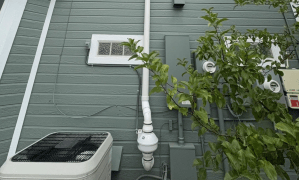
The installer drills a suction point through the basement floor and connects a PVC pipe to a continuously running inline fan. The fan maintains consistent negative pressure below the slab 24 hours a day. A small manometer gauge on the pipe gives you a visual indicator that the system is operating. If the fluid levels equalize, the fan needs service.
Where the System Vents Radon Outside the Home
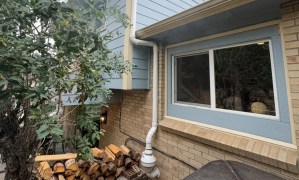
The pipe routes either through the interior, up through a closet or utility chase, or along the exterior wall, terminating above the roofline. Both routes are equally effective. Radon discharges above the home, where it disperses harmlessly into outdoor air, well away from windows and HVAC intakes.
Finished vs. Unfinished Basements: Does It Change the System?
Mitigation in Unfinished Basements
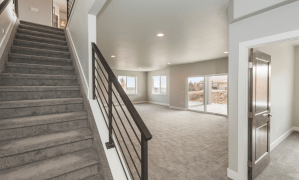
Unfinished basements are the most straightforward. The installer has direct access to the slab floor, easy visibility of the foundation walls, and flexible options for pipe routing. These jobs move quickly and are typically completed in four to six hours.
Mitigation in Finished or Partially Finished Basements
Finished basements require more planning. The installer needs to locate a suction point that minimizes disruption to flooring and walls, and pipe routing may need to go through a closet, utility room, or interior wall to stay out of sight. The system is just as effective; it just takes more care to install cleanly.
What to Expect When Access Points Are Limited
In some finished basements, cutting through flooring or navigating around finished walls adds time. A good contractor will walk the space before installation and identify the least invasive path. In rare cases, two suction points may be needed to achieve full sub-slab coverage when access limits the primary point location.
What About Homes With Sump Pits?
Sump pits are one of the largest single radon entry points in a basement. They’re essentially open holes in the foundation floor, creating a direct connection between the soil below and the indoor air above.
The good news: sump pits can be incorporated directly into a mitigation system. A sealed sump pit cover connects to the vent pipe, turning the pit from a radon entry point into a radon collection point. In many basements, this approach eliminates the need to drill a separate suction point through the slab.
For a full breakdown of how these systems work together, our post on radon mitigation and sump pumps covers the details.
How Long Does Basement Radon Mitigation Take?
Most basement installations are completed in four to eight hours in a single visit.
Unfinished basements with clear slab access and straightforward pipe routing land toward the lower end. Finished basements, larger footprints requiring multiple suction points, or complex routing paths take longer. The installer performs a sub-slab communication test at the start to determine how many suction points the system needs — this diagnostic step keeps the job scoped correctly from the beginning.
Radon levels typically begin dropping within 24 hours of installation. Post-mitigation testing, placed after the system has been running for at least 24 hours, confirms the result within about a week.
How Much Does a Basement Radon Mitigation System Cost in Colorado?
For a standard Colorado basement, professional radon mitigation typically costs between $800 and $2,500. Most single-zone basement systems with one suction point fall in the lower half of that range. Larger homes, multiple suction points, or finished basements requiring careful routing push costs higher.
That number is small relative to what it addresses. Radon is the leading cause of lung cancer among non-smokers in the United States, responsible for approximately 21,000 deaths per year. A one-time mitigation investment protects everyone in the home for as long as the system runs. For a detailed look at the cost-benefit picture, our post on “ Is Radon Mitigation Worth It? “ breaks it down clearly.
Get a Basement Radon Mitigation System Installed by Colorado Professionals
If your Colorado home has a basement, radon testing should already be on your list. If you’ve tested and the levels came back elevated, the next step is straightforward: schedule professional mitigation.
Better Colorado Radon installs basement radon mitigation systems across Colorado, with same-day installation for most residential properties and post-mitigation testing to confirm results.
Book Today to schedule your basement radon mitigation with Better Colorado Radon.