
Commercial radon testing isn’t federally mandated, but the EPA recommends it for any building where people spend significant time, including offices, retail spaces, schools, and daycares. Colorado’s geology puts a large share of commercial buildings at risk for elevated radon, and the same 4.0 pCi/L action level used for homes applies to workplaces. Testing a commercial property typically involves multiple devices placed across different zones and floors, since radon levels can vary significantly within a single building.
For business owners, landlords, and property managers, commercial radon testing is too often treated as a residential concern that doesn’t apply to them. That assumption is wrong, and in some cases in Colorado it’s also a legal liability. Whether you own an office building, manage a strip mall, lease space in a multi-story complex, or operate a licensed daycare center, understanding radon in commercial settings is an important part of protecting the people who spend time in your building every day.
Why Commercial Properties Need Radon Testing
Radon doesn’t distinguish between a house and a commercial building. It rises from uranium-bearing soil through the same foundation pathways, slab cracks, utility penetrations, and sump openings, regardless of what the structure above is used for. The difference is that commercial buildings are often larger, more complex, and occupied by more people for longer hours, which means the potential public health impact of elevated radon in a commercial setting can be significantly greater than in a single-family home.
The building types most at risk are those with ground-floor or below-grade occupied spaces: first-floor offices, retail suites, daycare facilities, school classrooms, healthcare clinics, gyms, restaurants, and any other space where employees or the public spend extended time at or near foundation level. Upper floors typically show lower radon concentrations, but large shared HVAC systems in commercial buildings can distribute soil gas vertically in ways that don’t occur in residential settings, making multi-floor testing important in taller structures. Colorado’s geology compounds the risk for all of these occupancy types equally. The same uranium-rich granite formations that drive elevated radon into homes across all 64 of the state’s counties affect commercial buildings on the same parcels in the same ways.
Is Commercial Radon Testing Required by Law?
The federal regulatory picture on commercial radon is a patchwork of guidance rather than a single clear mandate. The EPA recommends a 4.0 pCi/L action level for all buildings where people spend significant time, but does not impose a federal testing requirement on most private commercial properties. OSHA’s formal occupational radon exposure standard, established in 1971 under 29 CFR 1910.1096, sets a permissible limit of 100 pCi/L averaged over a 40-hour workweek, a threshold that health and safety advocates widely consider outdated and insufficiently protective given modern scientific understanding of radon’s carcinogenicity. In practice, OSHA’s standard is not a testing mandate; it’s a ceiling that employers in typical offices and retail buildings are unlikely to approach, but it does not eliminate an employer’s duty of care to workers under general OSHA principles.
Where Colorado draws clearer lines is in specific occupancy categories. Colorado regulations require schools to test for radon in accordance with the 2015 AARST measurement protocols and to maintain results on file at the school. Newly constructed schools must test for radon within 19 months of occupancy, and remodeled schools must be evaluated by the state to determine whether additional testing is needed. For daycare facilities, Colorado regulations require existing child care facilities to have conducted radon testing and require new facilities to conduct radon tests within six months of occupancy. For a full breakdown of what these requirements mean in practice, our page on radon regulations for schools covers the compliance landscape in detail.
For commercial properties that fall outside these mandated categories, the liability picture is a meaningful practical consideration even without a hard testing requirement. A business owner or landlord who ignores a known radon risk and an employee or tenant later develops radon-related lung cancer faces potential negligence exposure that a documented testing and mitigation history would have directly addressed. Insurance carriers are increasingly attentive to indoor environmental liability, and professional radon testing creates a documented record that a property manager took their duty of care seriously.
How Is Commercial Radon Testing Different From Residential Testing?
Larger and More Complex HVAC Systems
In a typical single-family home, the HVAC system is relatively simple, one air handler, one set of ducts, one zone. Commercial buildings often operate with multiple air handlers, variable air volume systems, make-up air units, and exhaust fans that create complex pressure relationships throughout the building. These systems can depressurize certain zones relative to others, drawing soil gas in more aggressively in some areas while diluting it in others. Understanding how a building’s HVAC architecture influences radon distribution is a prerequisite for designing a testing plan that captures the full picture rather than just sampling the easiest spaces to access.
Multiple Floors and Zones
Residential radon testing focuses on the lowest livable level of a home, because that’s where concentrations are highest and where occupants are most exposed. Commercial testing must account for multiple occupied floors, different tenant spaces on the same floor, and areas with different ventilation rates or foundation contact. The ANSI/AARST measurement protocols for multifamily, school, commercial, and mixed-use buildings specify testing requirements by floor level and occupancy zone rather than simply placing a single device in the lowest area, which means a thorough commercial test in a medium-sized office building may involve significantly more devices than even a large residential property.
Continuous vs. Short-Term Monitoring
Short-term passive tests are the standard for residential real estate transactions, but commercial settings often benefit from continuous electronic radon monitoring, which logs real-time radon levels at frequent intervals rather than producing a single averaged result. Continuous monitoring reveals patterns tied to HVAC cycles, business hours, occupancy loads, and weather changes that a passive test averaged over 48 hours would flatten out entirely. For property managers overseeing occupied commercial buildings where disruption must be minimized, continuous monitors can also be deployed without requiring the kind of closed-building conditions that residential short-term testing demands, making them a practical fit for active commercial environments.
The Commercial Radon Testing Process
Site Assessment and Testing Plan
Professional commercial radon testing begins with a site assessment that considers the building’s square footage, number of floors, foundation type, HVAC configuration, and current occupancy layout. This assessment shapes the testing plan, determining how many devices are needed, where they should be placed, and which measurement protocol applies given the building’s use category. Skipping this step and simply placing a handful of devices in the first available spaces produces results that may miss problem zones entirely, particularly in buildings with large footprints or complex slab configurations.
Device Placement Across Zones
Devices are placed in ground-contact areas first, including all ground-floor occupied spaces and any below-grade areas such as basement storage, mechanical rooms, or parking levels. In multi-story buildings, testing typically focuses on the lowest two levels unless HVAC analysis or prior data suggests radon may be reaching upper floors through shared air systems. Devices are positioned away from exterior doors, HVAC supply vents, and high-traffic areas that could skew readings, and they remain in place for the duration required by the applicable radon testing protocols without being moved or disturbed.
Test Duration and Reporting
Most commercial radon tests run for a minimum of 48 hours under conditions that approximate typical building operation, with some protocols and occupancy types calling for longer test durations to account for HVAC variability and seasonal fluctuation. Upon completion, a licensed radon measurement professional compiles the results into a formal report that identifies the concentration measured in each zone, flags any areas at or above the EPA’s 4.0 pCi/L action level, and provides the documentation a property manager needs for compliance records, disclosure obligations, or mitigation planning.
What Happens If Commercial Radon Levels Are Elevated?
When any zone in a commercial building tests at or above 4.0 pCi/L, the EPA’s guidance is the same as it is for residential properties: action is warranted. In a commercial context, that action is both a health protection measure and, for mandated occupancy types like schools and daycares, a compliance obligation with disclosure requirements attached. For other commercial property types, acting on an elevated result and documenting that action is the clearest way to demonstrate that a property owner met their duty of care.
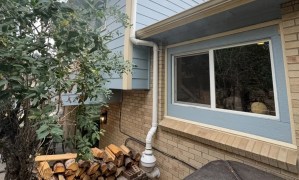
Mitigation in commercial settings follows the same fundamental principle as residential mitigation, sub-slab depressurization that draws soil gas from beneath the foundation and vents it above the roofline, but the design and scale are more complex. Larger building footprints may require multiple suction points and fans to achieve adequate depressurization across the full slab area. Buildings with multiple foundation types, such as a combination of slab and crawl space sections, require system designs that address each zone appropriately. Commercial radon mitigation systems are engineered for each building’s specific conditions rather than using a standardized residential template, which is why working with a contractor experienced in commercial applications matters significantly.
Timeline and disruption are practical considerations for occupied businesses. In most cases, mitigation installation can be scheduled during off-hours or weekends to minimize impact on operations, and the work itself is typically completed within one to two days for most commercial properties. Post-mitigation testing confirms the result before the system is considered complete, giving the property manager documented proof that radon concentrations have been reduced to below the action level in all tested zones. Ongoing radon system maintenance ensures the installed system continues performing as designed over time, since fan failure or system degradation can allow radon levels to creep back up without warning.
Choosing a Commercial Radon Testing Provider in Colorado
Not every radon testing company is equipped for commercial work. Residential testing requires one device, one protocol, and one result. Commercial testing requires site assessment, multi-zone planning, protocol selection based on occupancy type, and a formal report that meets the documentation standards required by Colorado regulations for mandated occupancy categories. When evaluating a commercial radon testing provider, look for a state-licensed radon measurement professional with documented experience in commercial and multi-zone buildings, familiarity with the ANSI/AARST MA-MFLB protocols that apply to commercial and large-building testing, and the ability to produce a report that meets compliance requirements for your specific occupancy type.
Before booking, ask prospective providers how they’ll approach the site assessment, how many devices they plan to place and why, what protocol they’ll follow, and what the deliverable report will include. A provider who can answer those questions clearly and specifically is one who understands that commercial testing is a different discipline from dropping a canister in a basement. For guidance on evaluating radon service companies more broadly, our post on choosing a radon mitigation company covers the key questions and qualifications to look for.
Protect Your Business With Professional Radon Testing
Radon in a commercial building is a manageable risk, but only if it’s identified and addressed. Colorado’s geology means that any business operating in a ground-floor or lower-level space is in a state where elevated radon is the norm rather than the exception, and the assumption that a commercial building is somehow protected from the same soil conditions that affect residential properties is simply not supported by the science. Whether you’re seeking compliance documentation for a school or daycare, building a defensible record of environmental due diligence for a commercial lease, or simply ensuring that employees and customers are breathing safe air, professional commercial radon testing is the necessary starting point.
Better Colorado Radon works with business owners, property managers, and facility operators across Colorado to design and execute commercial radon testing programs that meet state standards, produce clear actionable results, and support any mitigation work needed to bring buildings into compliance. Our licensed team has the experience and equipment to handle multi-zone commercial properties of all sizes.
Book Today to schedule commercial radon testing for your Colorado property and protect the people who spend time in your building.